
Durable meeting WP11 – June 2026
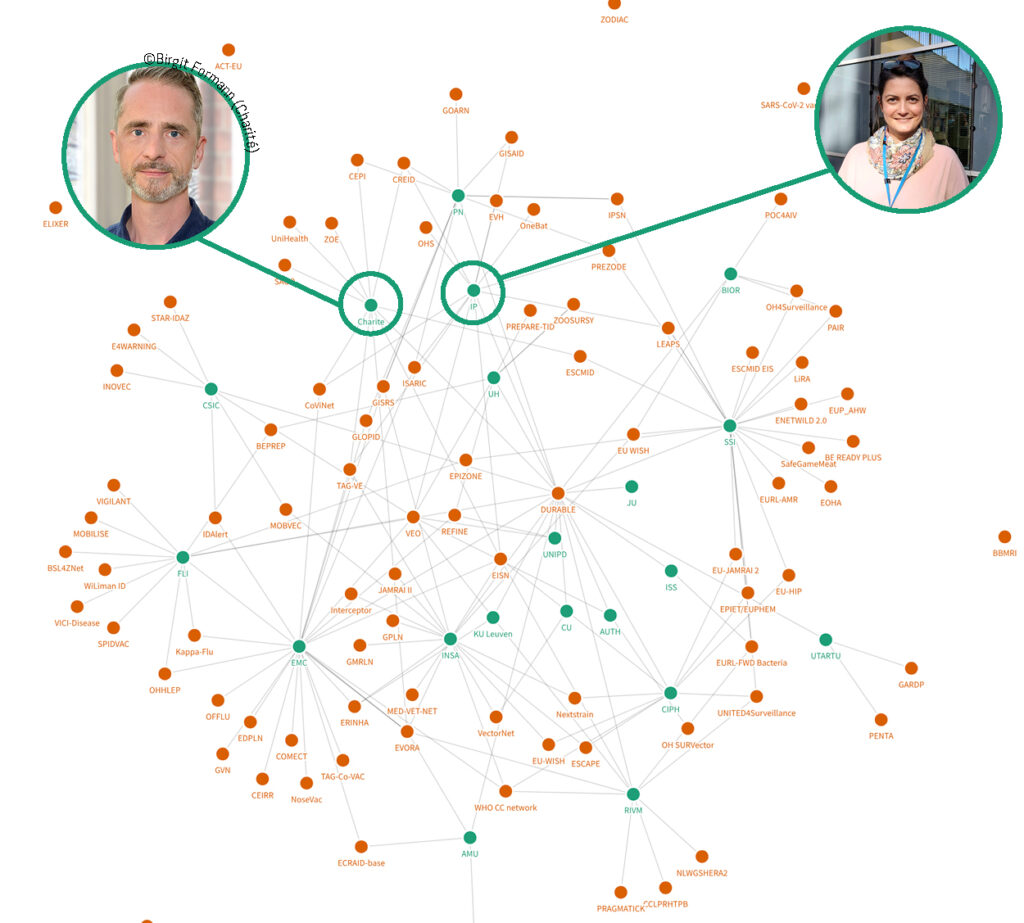
On Friday June5 2026, the WP11 network of Durable held its June meeting, bringing together experts from across Europe to discuss ongoing research on outbreaks of respiratory viruses. This time there was room for two extensive presentations: one from Delphine Planas from INSERM – IAME and Institut Pasteur from France and a presentation by from Marcel Müller from Charité, Germany.
Delphine Planas presented her ongoing research on how human coronaviruses interact with the respiratory tract. Her work focuses on the role of the Aryl Hydrocarbon Receptor (AhR), an environmental sensor that responds to external factors such as air pollution and may influence both viral replication and the immune response of the airway epithelium.
Using advanced models of human airway cells, she is investigating why different coronaviruses behave differently in nasal, bronchial, and lung tissues. Preliminary findings suggest that both temperature and AhR signalling pathways play an important role in coronavirus replication and in maintaining the integrity of the respiratory epithelium. These insights could contribute to a better understanding of how environmental factors affect respiratory viral infections.
Marcel Müller presented recent research on the incidence, genomic diversity, and phenotypic characteristics of recent MERS-CoV strains circulating in East Africa. Based on extensive field studies in Kenya, his team found evidence that MERS-CoV infections in camels follow a seasonal pattern, likely influenced by factors such as camel births, migration, and the availability of food and water. The research also suggests that transmission from camels to humans does occur in Kenya, although infections may often remain asymptomatic or mild.
The meeting highlighted the importance of international collaboration in advancing our understanding of emerging respiratory viruses and their potential impact on public health.


