How can we further strengthen global preparedness?
The outbreak of hantavirus disease caused by the Andes virus aboard a cruise ship highlights the complexity of managing an international outbreak. It serves as another reminder that preparedness cannot remain a reactive exercise initiated only during crises. The outbreak also highlights the need for sustained preparedness efforts, particularly as financial pressures threaten critical public health capacity. It underscores the gap between pathogen risk recognition and the availability of deployable medical countermeasures, reinforcing the need for an “all-of-society” approach that involves stakeholders and societal groups beyond the public health sector at every stage of the preparedness and response cycle.
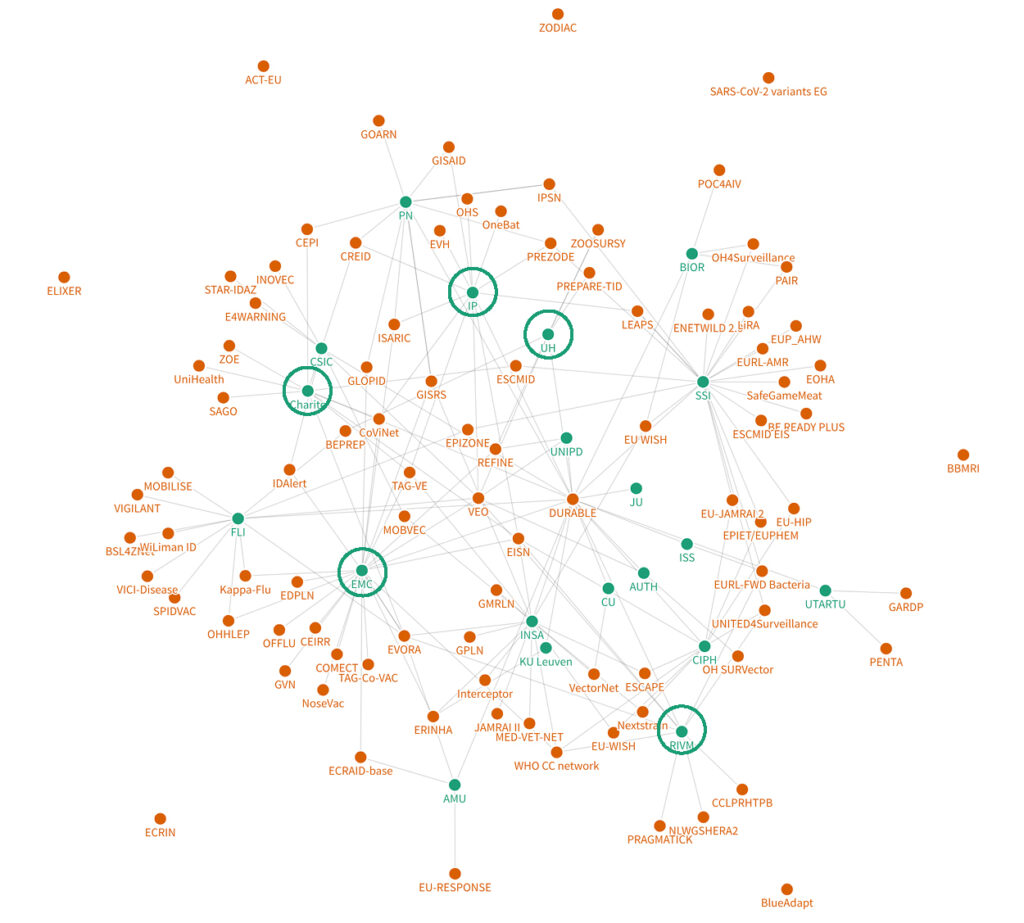
In this recently published Lancet article, @Marion Koopmans et al. place this outbreak within the broader context of global epidemic and pandemic preparedness. Several of the paper’s main authors are members of the DURABLE project, which liaises with expert networks relevant to emerging disease preparedness and response.
Below are the authors’ recommendations to strengthen outbreak preparedness and response.
Recommendations – How to improve outbreak responses?
1. Invest in One Health early warning surveillance to provide essential information on potential epidemic threats before they evolve into outbreaks. Such surveillance can be targeted to areas with increased or increasing risk, and should increase understanding of pathogen diversity, reservoir hosts, their geographic range, and the infection dynamics in these hosts.
2. Strengthen sustained investment in epidemic preparedness and response infrastructure with core capacity for case finding, contact tracing, testing, and the swift deployment of standard public health interventions
3. Expand integrated environmental surveillance approaches, including wastewater, air, and surface sampling, in high-risk international travel and transport settings such as cruise ships, airports, ports, and other major transportation hubs.
4. Strengthen development and access to field-deployable diagnostics, portable sequencing, real-time genomic analysis, and serology capable of supporting outbreak detection and characterization outside centralized laboratory systems.
5. Invest in building and sustain the specialist research infrastructure, high-containment laboratory capacity, and multidisciplinary scientific expertise necessary to investigate, characterise, and respond rapidly to emerging pathogens.
6. Support and strengthen the research base for development of scalable diagnostics, antivirals, vaccines, monoclonal antibodies, and adaptable platform technologies targeting pathogens with known epidemic potential.
Regarding international coordination, the recommendations are:
7. Develop and routinely implement multinational outbreak simulation exercises focused on rare but high-consequence pathogens, including diseases with prolonged incubation periods and complex international contact tracing requirements.
8. Continue strengthening of international preparedness frameworks, including broad participation in WHO-led coordination mechanisms and implementation and ratification of pandemic agreement frameworks.
Regarding the infodemic, the recommendations are:
9. Prepare for the growing challenge of misinformation and disinformation during outbreak response.
Rapidly evolving information environments can undermine public trust, complicate risk communication, and reduce confidence in evidence-based public health measures. Strengthening scientific communication capacity, trusted public engagement, and coordinated approaches to outbreak information management should therefore be considered integral components of epidemic and pandemic preparedness.
Read the Viewpoint article in the Lancet here: https://www.thelancet.com/journals/lanepe/article/PIIS2666-7762(26)00167-5/fulltext
The authors of this paper are:
Marion Koopmans – Director Pandemic and Disaster Preparedness Research Center, and Viroscience Department, Erasmus MC, Rotterdam, the Netherlands
Christian Brechot – Department of Internal Medicine, University of South Florida, USA
Roberto Bruzzone – Center for Immunology & Infection, Hong Kong Science Park, Hong Kong Special Administrative Region, PR China; Institut Pasteur, Paris, France
Moussa Moïse Diagne – Virology Department, Institut Pasteur de Dakar, SenegalChristian Drosten – Institute of Virology, Charité Universitätsmedizin Berlin, GermanyIsabella Eckerle- Geneva Centre for Emerging Viral Diseases, University Hospitals of Geneva and Faculty of Medicine, University of Geneva, Geneva, Switzerland
Robert Gallo – Division of Infectious Diseases, University of South Florida, USF Health Institute for Translational Virology & Innovation, Tampa General Hospital Cancer Institute, USA
David T. S. Hayman – Molecular Epidemiology and Public Health Laboratory, Massey University, New Zealand
Peter Horby – Pandemic Sciences Institute, Oxford University, Oxford, UKPeter Hotez – National School of Tropical Medicine, Baylor College of Medicine, USA
Menno de Jong – Centre for Infectious Disease Control, National Institute for Public Health and the Environment, Bilthoven, the Netherlands
Florian Krammer – Ignaz Semmelweis Institute, Interuniversity Institute for Infection Research, Medical University of Vienna, Vienna, Austria; Ludwig Boltzmann Institute for Science Outreach and Pandemic Preparedness at the Medical University of Vienna, Vienna, Austria; Department of Microbiology, Icahn School of Medicine at Mount Sinai, New York, USA
Jean Claude Manuguerra – Institut Pasteur, Université Paris Cité, Environment and Infectious Risks Unit, Laboratory for Urgent Response to Biological Threats (CIBU), French National Reference Centre for Hantaviruses, France
Gustavo Palacios – Global Health Emerging Pathogens Institute, Department of Microbiology, Icahn School of Medicine at Mount Sinai, New York, United States
Massimo Palmarini – Department of Viroscience, Erasmus Medical Centre, Rotterdam, the Netherlands; MRC-University of Glasgow Centre for Virus Research, Glasgow, UK
Anja Schreijer – Pandemic and Disaster Preparedness Research Center, Erasmus MC, Rotterdam, the Netherlands
Nicole D. Tischler – Laboratorio de Virología Molecular, Centro Ciencia & Vida, Fundación Ciencia & Vida and Escuela de Bioquímica, Facultad de Ciencias, Universidad San Sebastián, Santiago, Chile
Tulio de Oliveira – Centre for Epidemic Response and Innovation (CERI), Stellenbosch University, Stellenbosch, South Africa
Bas B. Oude Munnink – Department of Viroscience, Erasmus MC, Rotterdam, the Netherlands
Malik Peiris – School of Public Health, The University of Hong Kong, Hong Kong Special Administrative Region, PR China
Emma Thomson – MRC-University of Glasgow Centre for Virus Research, Glasgow, UK
Olli Vapalahti – Departments of Virology and Veterinary Biosciences, University of Helsinki, and Helsinki University Hospital Diagnostic Center, Finland
Marietjie Venter – Faculty of Health Sciences, University of the Witwatersrand, Johannesburg, South Africa
Jacqueline Weyer – Center for Emerging and Zoonotic Diseases, National Institute for Communicable Diseases, A Division of the National Health Laboratory Service, Johannesburg, South Africa; Department of Virology, University of Witwatersrand, Johannesburg South Africa, and Department of Medical Virology, University of Pretoria, Pretoria, South Africa
Yazdan Yazdanpanah – Infectious Disease Department at Bichat–Claude Bernard Hospital, Director ANRS Emerging Infectious Diseases, Paris, France
Erik A. Karlsson – Virology Unit, Institut Pasteur du Cambodge, Phnom Penh, Cambodia
DURABLE is co-funded by the European Union’s EU4Health programme.