
DURABLE IV annual meeting: connecting research, preparedness and response
Strengthening preparedness for emerging infectious disease threats
From 28–30 September 2026, the DURABLE consortium gathered at the Heineken Gebouw in Rotterdam, the Netherlands, for its fourth annual meeting. Marion Koopmans and Roberto Bruzzone, Principal Investigators of the project, moderated the three-day meeting, guiding discussions on the scientific progress, the development of the European Durable network, and the next steps in strengthening preparedness for emerging infectious disease threats.
Over three days, researchers, public health and laboratory experts, as well as and representatives of HERA and European preparedness initiatives shared scientific advances and achievements from across the DURABLE network. Together, they reflected on nearly four years of collaboration and discussed how to further strengthen Europe’s preparedness and response to emerging infectious disease threats.
Day I – Monday September 28
The first day opened with reflections on DURABLE’s role in supporting European preparedness, followed by a contribution from the European Commission’s Health Emergency Preparedness and Response Authority (HERA)
The first session was chaired by Johan Neyts (KU Leuven) and focused on the development of antivirals targeting entire virus families. Neyts highlighted the need to build a portfolio of antiviral compounds that could strengthen preparedness against emerging threats. Vanessa Correia (INSA) presented structure-guided approaches to identifying promising drug targets and compounds against flavivirus NS5 polymerase. Together, the presentations illustrated the potential of broadly applicable therapeutics to expand treatment options for future outbreaks.
During the second session on Monday, Mathilde Richard (Erasmus MC) explored the opportunities and challenges of developing broadly reactive immune responses against emerging viruses. Richard presented novel vaccine concepts aimed at broadening protection, while Olivier Schwartz (Institut Pasteur) focused on mpox immune evasion. Marie-Anne Rameix-Welti (Institut Pasteur) addressed the circulation of RSV strains resistant to the monoclonal antibody nirsevimab. Together, these topics highlighted the importance of understanding both the potential of broader protection and the ways viruses can escape immune responses.
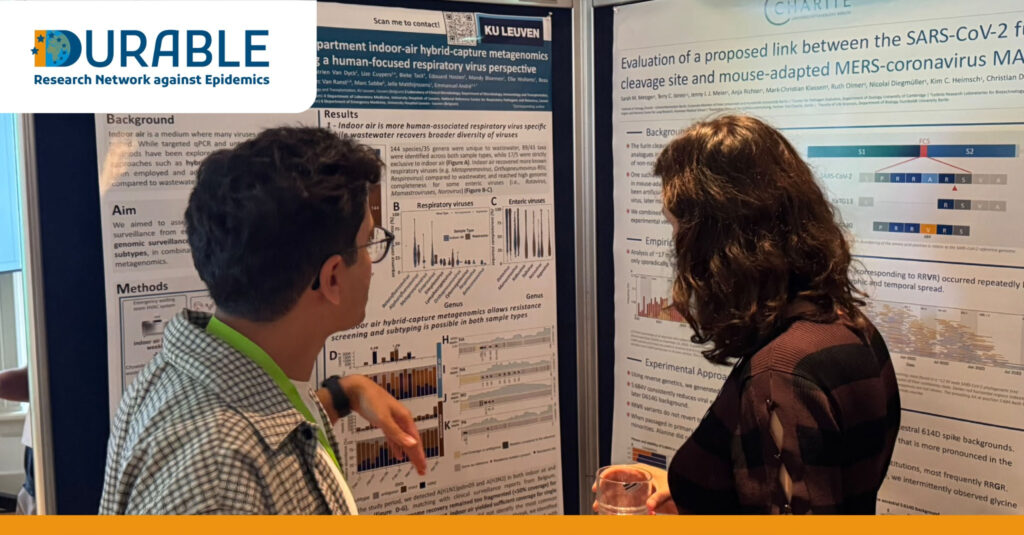
The poster sessions reflected the scientific expertise within the network, with presenters affiliated with institutions in Belgium, Croatia, Czechia, Denmark, Estonia, France, Germany, Greece, Italy, Latvia, the Netherlands, Portugal and Spain.
At the end of Day I, the “Genomics meets public health” session explored how viral genomic research can inform preparedness and surveillance. Terry Jones (Charité) highlighted how studying ancient viruses can reveal past viral diversity and help us consider threats beyond those circulating today. Marius Brusselmans (KU Leuven) presented research on H5N1 in the sub-Antarctic and Antarctic regions, while Vitor Borgers (INSA) discussed bioinformatics tools supporting clinical metagenomics, pathogen detection and outbreak tracking.
Xin Hou (Institut Pasteur) shared insights from ten years of RSV genomic surveillance in France, examining transmission dynamics and the impact of the COVID-19 pandemic.
Closing the session, Liva Mazure (BIOR) presented research on the occurrence and genetic diversity of coronaviruses in Latvia’s bat population. Together, the presentations illustrated how genomic information can deepen our understanding of viral emergence and spread across human, animal and environmental settings.
Day II – Tuesday September 29
Nothing to waste – innovative surveillance approaches
The second day opened with “Nothing to waste”, a session chaired by Miranda de Graaf (Erasmus MC) on innovative surveillance approaches. De Graaf explored how metagenomic analysis of wastewater can reveal circulating viruses and support early warning of emerging threats.
Lisa Cavillot (KU Leuven) presented indoor air sampling in an emergency department as a continuous, non-invasive approach to monitoring respiratory pathogen circulation. Janko van Beek (Erasmus MC) shared experiences from environmental surveillance during the hantavirus outbreak aboard the Hondius, examining possible transmission routes. Together, the presentations illustrated how environmental sampling can complement clinical surveillance and inform outbreak investigations.
From toolboxes to lab in a bag to a PCR in a tuk-tuk
The next session, chaired by Jessica Vanhomwegen (Institut Pasteur), focused on bringing diagnostic tools from the laboratory into the field. Vanhomwegen highlighted a central preparedness challenge: outbreaks start with syndromes, not pathogen labels. She presented an expanding toolbox of portable detection methods designed to deliver results within hours and inform response quickly enough to matter, with serology complementing molecular detection.
Erik Karlsson (Institut Pasteur du Cambodge) illustrated practical applications through air sampling at poultry markets and a “lab in a bag” approach to on-site surveillance, including running PCR in a moving tuk-tuk. Nicolas Berthet (Institut Pasteur) presented Ebola virus detection in a treatment centre. The session was followed by the second round of one-minute poster pitches, opening further opportunities for discussion and exchange.
Diagnostic preparedness and the evolving role of reference centres
In the afternoon, the focus shifted to diagnostic preparedness and the evolving role of reference centres. Joining online from Seoul, Christian Drosten (Charité) discussed DURABLE’s coordinated diagnostic responses to the Andes hantavirus and Bundibugyo virus crises. He highlighted how regulatory requirements for in vitro diagnostics can create unintended barriers to outbreak preparedness, and the importance of expert laboratory networks in evaluating tests rapidly.
Ron Fouchier (Erasmus MC) presented the European Union Reference Laboratory for respiratory viruses, while Till Best (Charité) discussed laboratory investigations into causes of meningoencephalitis, including West Nile virus.
Linking public health and research: emerging arbovirus work as a showcase
The second afternoon-session, Chaired by Tyra Grove Krause (Statens Serum Institut), used emerging arboviruses to explore how research can inform public health action. Luisa Barzon (University of Padova) discussed how ecological studies can help determine what to monitor, when to intervene and which evidence is needed to guide countermeasure development. Corinna Patina-Mehling (Charité) examined West Nile virus in Berlin, highlighting how local differences in mosquitoes, bird populations and urban habitats shape transmission. Muriel Aguilar Bretones (Erasmus MC) explored how previous exposures and population immunity influence the evolving immunological landscape, with implications for diagnostics, therapeutics and vaccines. The discussions reinforced the importance of combining ecological, surveillance and immunological evidence to guide targeted interventions.
Future directions based on the DURABLE experience
The final session of day two, chaired by Simon Cauchemez (Institut Pasteur), explored how modelling can translate complex data into decisions. Cauchemez highlighted the importance of reliable forecasts for planning medical countermeasures.
Frederic Bartumeus (CSIC) connected citizen participation with targeted mosquito control. His presentation explored how citizen-generated data via the Mosquito Alert App, communication and environmental information can support surveillance and help determine when and where interventions will have the greatest impact.
Fabien Filaire (Erasmus MC) presented research on how pre-existing immunity affects influenza A virus replication and infectious airborne shedding in ferrets, while Catherine Decouttere (KU Leuven) examined the role of network models in research implementation and decision-making.
Day III – Wednesday 29 September
Learning community
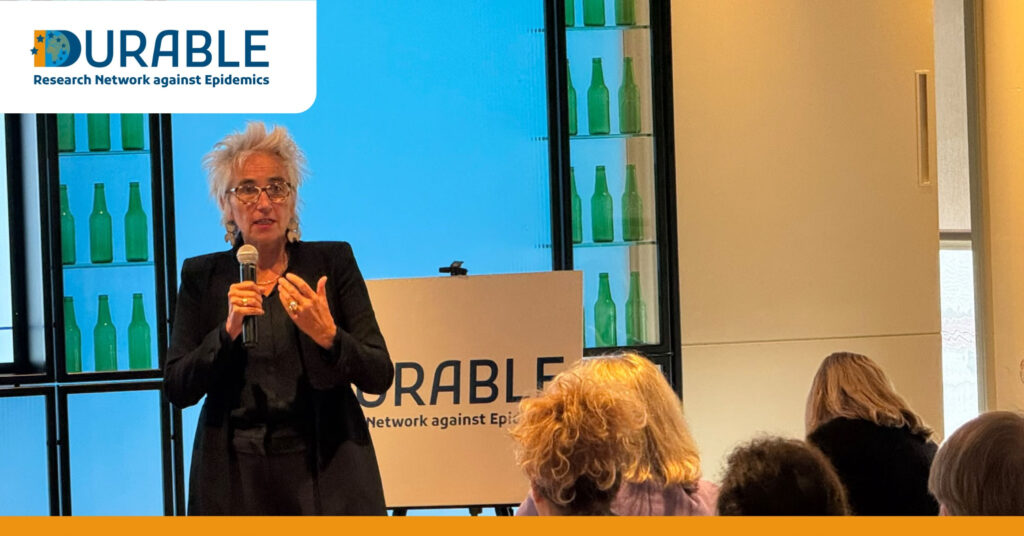
Training and knowledge sharing are central to DURABLE’s development as a learning community. Workshops, webinars, fellowships and the DURABLE-MOOC enable researchers to exchange expertise about preparedness, learn new methods and build connections across institutions and countries. The capacity-building session brought these activities into focus.
DURABLE capacity building
Renaud Vatrinet (Pasteur Network) moderated the session about the capacity building within the DURABLE network. Grégoire Davignon (Pasteur Network) presented DURABLE’s online MOOC on research management in outbreak preparedness and response which already attracted nearly 1,500 participants from around the world. Drawing on the network’s experience, the course shares practical insights into organising and coordinating research before and during health emergencies, bringing DURABLE’s expertise to a wider international audience.
Aleksandra Milewska (Jagiellonian University) shared the experience of investigating an unexpected H5N1 spillover event in cats in Poland in June 2023. Faced with a rapidly progressing and often fatal disease, researchers drew on the DURABLE network to connect with other laboratories and access complementary expertise. Her presentation illustrated how established relationships across the consortium can facilitate rapid collaboration when an unexpected health threat emerges.
Travel grant recipients Alexandre Bouffier (Erasmus MC), Demetrios Christos Tremoulis (Hellenic Pasteur Institute), Chittaphone Vanhnollat (Institut Pasteur du Laos), Laura van Dijk (Erasmus MC), Victoire Perraud (Institut Pasteur), Christina Merakou (Istituto Superiore di Sanità), Nina Mickiewicz (Jagiellonian University) and Johanna Laura Heinz (Statens Serum Institut) then shared their experiences. Their presentations covered organoid models, computational pathogen detection, bat-borne virus research and arbovirus genomic surveillance, demonstrating how international exchanges translate into practical skills and research capacity within partner laboratories.
From genotype to phenotype intelligence Durable in the landscape of emerging diseases Chaired by Marion Koopmans and Roberto Bruzzone, the session explored how genomic information and experimental research can jointly inform the assessment of emerging threats. Martin Beer (Friedrich-Loeffler-Institut) presented H5N1 studies examining zoonotic potential and discussed the introduction of Shamonda virus into Europe, highlighting the value of rapid collaboration across the DURABLE network. Bas Oude Munnink (Erasmus MC) addressed the genomic investigation of mpox, including sequencing challenges and outbreak research in settings with limited resources. Jordi Rodon (Charité) connected research on MERS coronavirus diversity and circulation in dromedaries with experimental characterisation. Olli Vapalahti (University of Helsinki) discussed hantaviruses in Europe, followed by Massimo Palmarini (Erasmus MC), who presented research on Andes virus pathogenesis and transmission in hamsters, including infection within lung tissues. The discussion highlighted the importance of combining complementary methods, expertise and access to samples to understand how emerging viruses cause disease and spread.
The wider European preparedness landscape
The final day concluded with a connection of the DURABLE network to the wider European preparedness landscape, with contributions from Michel Pleschette of the European Vaccine Hub (EVH) and Quentin Gaday of Be Ready. Their presentations built on the collaborations announced earlier this year, highlighting how complementary expertise can help connect early threat detection, research, countermeasure development and clinical evaluation.
Addressing the fragmentation of current modelling efforts, DURABLE and the European Vaccine Hub are building a unified platform – and proposing a dedicated think tank – to integrate population immunity, production planning and supply chain logistics into one actionable tool. By combining EVH’s expertise in research and development of safe and effective vaccines and monoclonal antibodies with DURABLE’s expertise in modelling and translating research into policy guidance, we are turning complex research into coordinated, practical action.
The partnership with Be Ready connects its pan-European clinical network and coordination role with DURABLE’s rapid scientific intelligence, pathogen research and predictive modelling. The aim is to align activities, avoid duplication and strengthen coordination across the response pathway, from identifying emerging threats to organising clinical trials. Regular exchanges of insights will help both networks inform their strategic priorities.
Effective preparedness depends on strong relationships
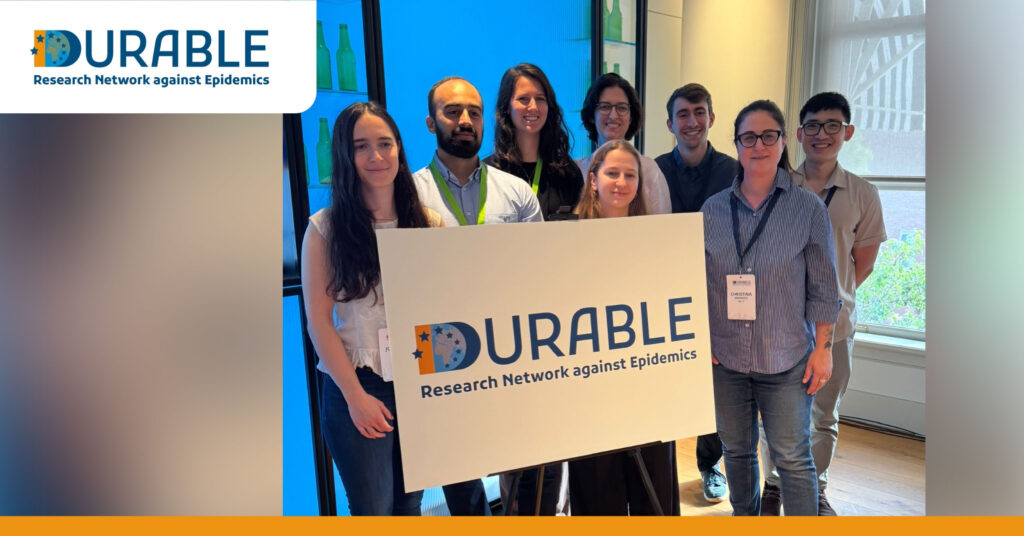
In the closing discussions, Koopmans and Bruzzone reflected with participants on the importance of sustaining the expertise, collaborations and personal connections developed through the project.
Across all three days, a recurring message was clear: effective preparedness depends on strong relationships between laboratories, researchers and public health organisations before a crisis occurs. Thank you to all participants, speakers and organisers for their contributions and continued commitment to the DURABLE community.


