Daniel Sobral
Can you share a little about yourself and your research?
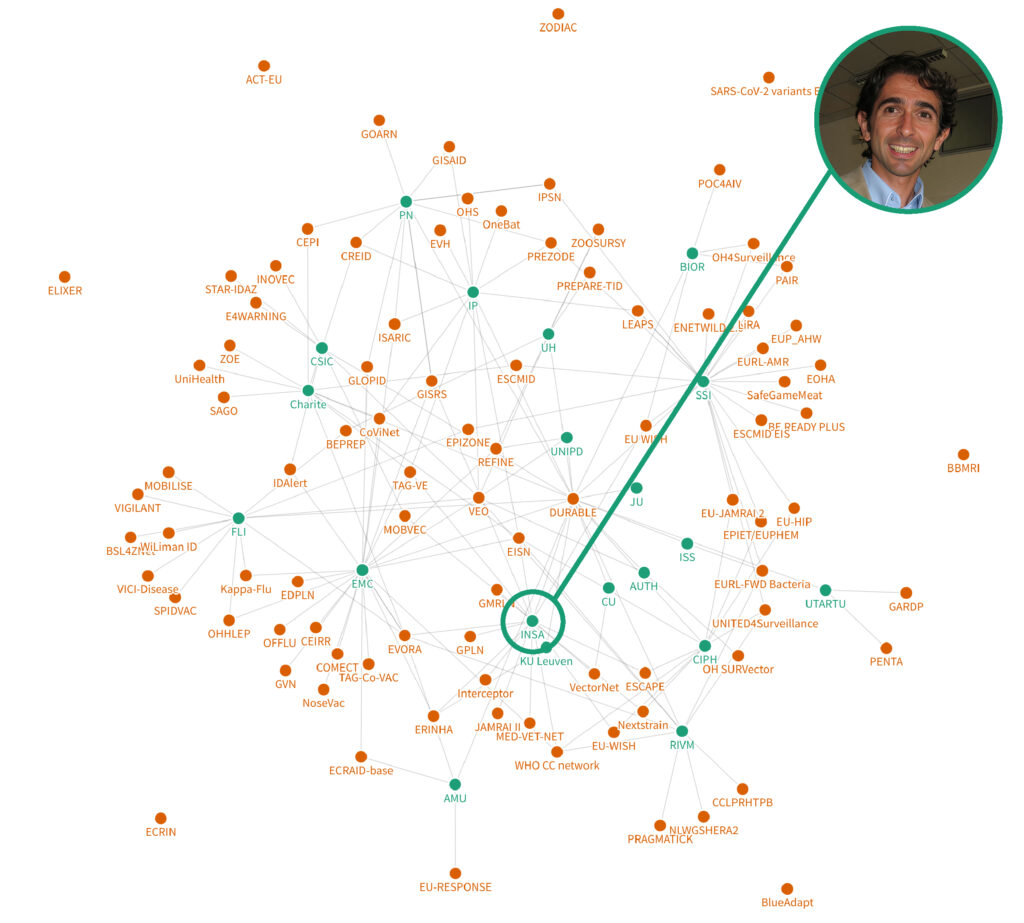
I am a senior bioinformatician working within the Genomics and Bioinformatics Unit of the Department of Infectious Diseases at INSA, the Portuguese National Institute of Health. My path was a winding one: trained originally as an informatics engineer, I did a PhD in bioinformatics in France, on gene expression and transcriptional regulation in chordate development. After that I spent years on the functional genomics side of biology — postdoctoral work at the European Bioinformatics Institute building pipelines for large projects like ENCODE, then leading the Bioinformatics Facility at the Instituto Gulbenkian de Ciência, and later working on cancer biology at UCIBIO FCT-NOVA. Since 2022 I’ve turned that experience toward public health: developing and applying genomic and metagenomic methods to detect, characterise and track pathogens. I contribute mostly to the viral surveillance efforts at INSA, and, more recently, to clinical diagnostics using metagenomics. A major component of my work is in implementing genomic data analysis workflows and making them available to the community through the INSaFLU platform developed at INSA. I also contribute to the data management infrastructure at INSA, towards improving data FAIRness.
How does your research fit into the bigger picture of Durable?
Working at the Department of Infectious Diseases at INSA, my work is a direct fit into the bigger picture of Durable. I contribute to data collection, analysis and sharing, turning data into reliable, interpretable information about what is circulating and how it’s evolving. This includes translating computational methods that are sensitive but also trustworthy, where results are reproducible across labs. These are exactly the kinds of validated, deployable approaches that DURABLE needs to feed scientific information into timely public health decision-making.
“Pathogens don’t respect borders, and neither should the data and tools we use to track and fight them. As the 2022 mpox outbreak made plain, the connected, real-time capacity DURABLE is building is exactly what a fast response needs.”
What motivates you to be part of Durable?
Coming from a computational background, and having worked in fields that crossed development biology, cancer and now infectious diseases, I value environments where methods and ideas travel between fields. DURABLE brings together people working on the same preparedness questions from very different angles – virology, epidemiology, evolution, infrastructure. Contributing to a network where basic-science tools are deliberately translated into actionable public health information is, for me, the most meaningful use of what I do. The sense of contributing to something larger is the icing on the cake: improving European capacity to respond quickly and reliably when the next threat appears.
What do you expect to accomplish in the upcoming years within your own institute and by being connected to Durable?
Within INSA, I want to maintain and improve the highly successful INSaFLU platform, hardening its capacities against the diversity of data, pathogens and settings that the DURABLE European network provides, and to contribute tools and protocols others can adopt. One avenue of development is clinical metagenomics, which we want to turn from a promising capability into a robust, routine part of surveillance — with auditable systematic criteria for interpreting results, and reporting findings in a way clinicians and public health teams can act on. Capacity building has always been an important component of my work, and I expect to continue helping build the next generation of researchers and public health practitioners.
What do you expect from Durable in the upcoming near future?
I expect DURABLE can provide networks of expertise, where workgroups can establish best practices and standards for data sharing and capacitation for a better response to potential outbreaks. I hope it keeps being a place where collaborations crystallise into concrete, shareable outputs — datasets, tools, workflows — that are truly useful beyond any single institute.