Líbia Zé-Zé, PhD
Can you share a little about yourself and your research?
I am an assistant professor at the Erasmus MC in Rotterdam, The Netherlands, where I leaI am a molecular biologist specialising in the diagnostics of vector-borne viruses (VBV) and the molecular screening of arboviruses in arthropod vectors.
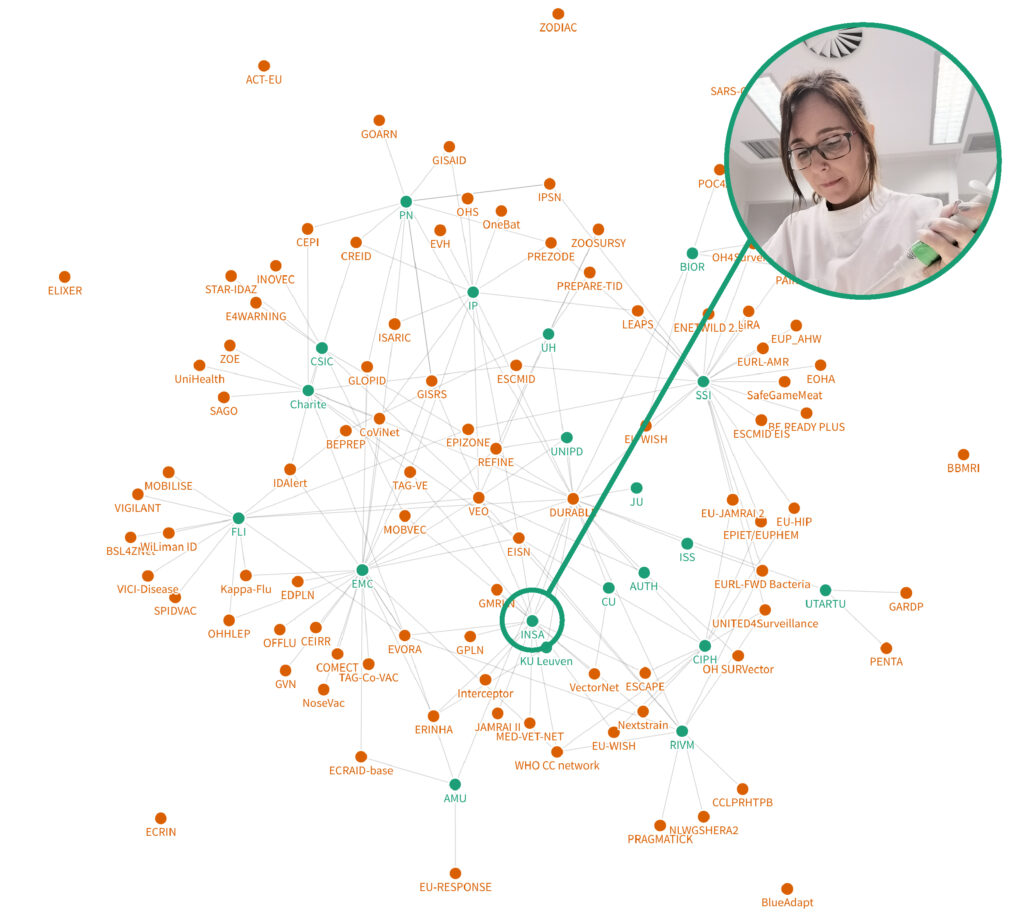
Since 2026, I have been Head of the Portuguese National Reference Laboratory for Vector-Borne Viruses at the National Health Institute Dr. Ricardo Jorge (Centre for Vectors and Infectious Diseases Research, CEVDI, INSA).
Our laboratory has played a key role in detecting dengue on Madeira Island, including the DENV1 outbreak in 2012 and the local transmission of DENV2 in 2025. We have also identified the first cases of Crimean-Congo haemorrhagic fever and West Nile neuroinavsive disease in mainland Portugal, as well as several imported, travel-related arbovirus cases, notably DENV3-CHIKV and DENV3-OROV co-infections.
I find the complexity of VBV genomics, the dynamics of zoonotic cycles, and the eco-epidemiological challenges involved in tracking the effects of climate change and urban expansion on vector and pathogen transmission fascinating research subjects that never cease to amaze me. the pathogen genomics group. In my research group, we apply a broad range of sequencing technologies and bioinformatic approaches to monitor the emergence and spread of emerging viruses. In addition, we use metagenomic sequencing and advanced computational tools for the discovery of novel viruses.
How does your research fit into the bigger picture of Durable?
Vector-borne viruses are spreading worldwide due to global trade and travel, climate change, and the ability of vectors and viruses to adapt. There has been a steady increase in local transmission events involving Aedes-borne viruses in Europe. Several vector-borne viral diseases are currently included in the WHO E&D Blueprint as priority diseases due to their public health risk and epidemic potential. Therefore, VB viruses remain challenging research pathogens, and integrating our VBV research data into a broader context is essential. The DURABLE network brings together researchers from various reference institutions and locations to promote the timely exchange of knowledge, which is crucial to improving Europe’s preparedness for and response to emerging threats.
What motivates you to be part of Durable?
Being part of the DURABLE team is inspiring, providing an amazing opportunity to learn from and improve alongside fantastic researchers. The network unites experts from different backgrounds who are dedicated to offering prompt, multidisciplinary responses to emerging threats by enhancing surveillance, improving pathogen detection, and directing targeted control strategies.
What do you expect to accomplish in the upcoming years within your own institute and by being connected to Durable?
I hope to strengthen collaborations and contribute to arbovirus knowledge in Europe, particularly with regard to endemic viruses in Portugal, such as Crimean-Congo haemorrhagic fever, West Nile and Toscana viruses, as well as travel-related and imported cases, including dengue, Zika, chikungunya and Oropouche viruses, among others. I also aim to contribute to the timely identification of local transmission events of Aedes-borne viruses..
What do you expect from Durable in the upcoming near future?
I expect that reinforcing established collaborations will foster multidisciplinary studies, improve knowledge and preparedness regarding circulating and emerging pathogens, and support evidence-based public health decision-making.