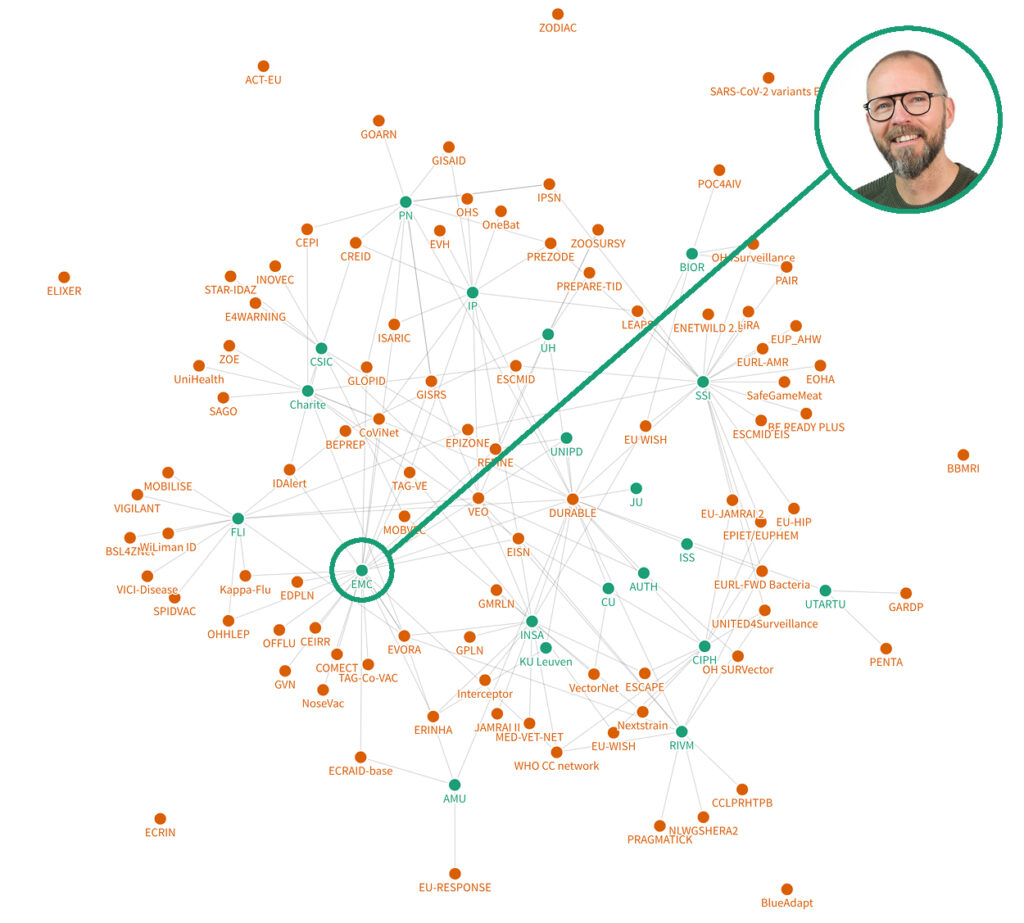
Gijs van Nierop
Can you share a little about yourself and your research?
I am an assistant professor in viro-immunology at Erasmus MC, focussed on understanding how pre‑existing cross-reactive immune responses impact the outcome of viral infections and vaccination. What drives me scientifically is the challenge of translating complex immune biology into insights that can genuinely inform vaccine design and public‑health decision‑making in outbreak situations.
My work sits at the interface of basic immunology, clinical research, and public health, with a particular emphasis on B‑cell immunity, immune imprinting, and cross‑reactive antibody responses. By developing and applying a clonal B‑cell analysis platform, my group aims to uncover the mechanistic rules that determine whether immune memory leads to protection or, in some cases, suboptimal or harmful outcomes.
How does your research fit into the bigger picture of Durable?
My research is closely tied to pandemic preparedness, and the B-cell platform technology is flexible and agile in response to newly emerging or re-emerging pathogens, with the COVID‑19 pandemic as a clear example. We showed that immune history matters enormously for how populations respond to SARS-CoV-2 and updated vaccines. Understanding these immune interactions at a mechanistic level is essential if we want to move from reactive responses toward more durable, predictive, and adaptable strategies for prevention.
Within the broader scope of the DURABLE project, my research contributes to the goal of building long‑term, resilient approaches to infectious‑disease prevention. DURABLE aims to move beyond short‑term crisis responses, and my work aligns with this by focusing on the durability, flexibility, and limitations of immune memory. By integrating detailed immunological analyses with clinical and population‑level studies, my research helps provide the mechanistic underpinning needed to design interventions that remain effective as viruses evolve and population immunity changes.
What motivates you to be part of Durable?
I am motivated to be part of DURABLE because it brings together complementary expertise across disciplines and institutes, creating a shared framework for addressing questions that no single group can answer alone. The consortium setting allows mechanistic insights from immunology to be connected directly to epidemiology, vaccinology, and implementation, which is essential for real‑world impact.
What do you expect to accomplish in the upcoming years within your own institute and by being connected to Durable?
In the coming years, I aim to further develop my research group at Erasmus MC into a recognized hub for B‑cell–focused immunological analysis, while strengthening links with clinical studies and international consortia. Through DURABLE, I expect to strengthen these connections, allowing me to contribute to integrated research strategies that support pandemic preparedness.
What do you expect from Durable in the upcoming near future?
From DURABLE, I expect a collaborative environment that challenges my work and helps translate it into broader impact. Being part of DURABLE strengthens my ability to place mechanistic immunology within a larger, forward‑looking framework aimed at preventing future pandemics more effectively and sustainably.